A business can lose money on transportation even when every vehicle is running and every delivery is completed. Underused vehicles, unnecessary trips, rising maintenance expenses, and poorly planned routes can quietly increase daily operating costs.
For businesses in Doha, a transportation service for business in Qatar can offer an alternative to managing every transport requirement in-house. Companies can arrange employee transport, goods movement, and scheduled deliveries according to their operational needs instead of maintaining additional vehicles for every demand.
The key is knowing which arrangement offers the best value for your business. Understanding your transport frequency, vehicle requirements, and total operating costs can help you choose a solution that controls expenses without disrupting daily operations.
TL;DR
- Compare outsourcing costs with fleet ownership expenses, including fuel, maintenance, insurance, and driver wages.
- Match transportation arrangements to your actual demand, from daily employee commutes to scheduled goods deliveries.
- Reduce unnecessary trips by grouping nearby deliveries, planning routes around delivery windows, and coordinating return journeys.
- Before signing a contract, confirm vehicle availability, breakdown support, pricing terms, and how the provider handles changing transport requirements.
| Table of contentsHow Transportation Services Help Businesses Reduce Daily Operating Costs Flexible Transportation Options for Different Business Requirements Reducing Vehicle Maintenance and Fleet Management Expenses Reliable Employee and Goods Transportation for Daily Operations How Businesses Can Optimize Transportation Routes and Fuel Costs FAQs |
How Transportation Services Help Businesses Reduce Daily Operating Costs
Transportation services help businesses reduce daily operating costs by limiting vehicle ownership expenses, improving resource utilisation, and matching transport capacity to actual demand.
Owning a fleet involves more than purchasing vehicles. Businesses must account for fuel, insurance, servicing, registration, driver costs, and unexpected repairs. When vehicles remain idle between assignments, these expenses continue without generating operational value.
Outsourcing suitable transport requirements can make costs easier to plan. Companies can arrange transportation around recurring schedules, specific projects, or changing delivery volumes rather than maintaining additional vehicles throughout the year.
For example, a company that needs regular deliveries between its warehouse and customer locations can compare the cost of maintaining a dedicated vehicle with an outsourced arrangement. The comparison should include driver wages, maintenance, fuel, vehicle downtime, and the provider’s charges.
When assessing business transportation services in Qatar, consider these potential savings:
- Lower ownership costs: Reduce the need to purchase additional vehicles for occasional requirements.
- More predictable budgeting: Agree on service schedules and pricing arrangements where available.
- Less administrative work: Reduce the time spent coordinating vehicle servicing, repairs, and driver schedules.
- Better capacity planning: Arrange transport according to passenger numbers, shipment volumes, and delivery frequency.
Outsourcing does not automatically cost less. Compare the total cost of each option against the actual transport requirement before making a decision.
Flexible Transportation Options for Different Business Requirements
Flexible transportation options allow businesses to choose vehicles, schedules, and service arrangements according to their workforce, cargo, and delivery requirements.
A business with regular staff movements has different transport needs from a retailer distributing products or a company moving equipment between project sites. Selecting a suitable arrangement prevents businesses from paying for capacity they rarely use.
Common requirements include:
- Employee transportation: Scheduled journeys between residential areas, accommodation, offices, and work sites.
- Goods transportation: Movement of products, materials, or equipment between suppliers, warehouses, and business locations.
- Scheduled deliveries: Planned trips for businesses that need regular collections and drop-offs.
- Project-based transport: Temporary arrangements for additional workers, materials, or deliveries during busy periods.
For example, a company operating across Doha’s commercial districts may require scheduled employee transport during working hours. A distributor serving several customer locations may need vehicles arranged around delivery windows and shipment sizes.
Businesses comparing corporate transportation services Qatar should confirm vehicle capacity, operating hours, collection points, service frequency, and procedures for additional trips. These details help prevent avoidable charges and scheduling conflicts.
For companies that also require residential or commercial relocation, specialist services may be more suitable. Businesses searching for movers and packers in Qatar should check whether the provider handles packing, loading, furniture protection, transportation, and unloading rather than assuming these services are included in a standard transport booking.
Reducing Vehicle Maintenance and Fleet Management Expenses
Businesses can reduce vehicle maintenance and fleet management expenses by outsourcing suitable transport requirements and avoiding the cost of maintaining underused vehicles.
Fleet ownership requires regular servicing, tyre replacements, inspections, insurance renewals, and repairs. Unexpected breakdowns can also interrupt deliveries and require businesses to arrange replacement vehicles at short notice.
A transport provider can take responsibility for vehicle maintenance and availability under the agreed service arrangement. This allows businesses to focus on their core activities while reducing the administrative work associated with operating a fleet.
Before choosing a provider, assess the following factors:
- Vehicle availability: Confirm whether suitable vehicles are available during your required operating hours.
- Maintenance arrangements: Ask how the provider handles breakdowns and replacement vehicles.
- Service continuity: Establish how urgent transport requirements will be managed when schedules change.
- Contract terms: Review minimum booking periods, cancellation conditions, additional-trip charges, and responsibility for delays.
For companies requiring commercial transportation services Doha, the right arrangement depends on the number of trips, vehicle requirements, and operating schedule.
For example, a business that needs deliveries only on selected days may benefit from scheduled transport rather than maintaining a dedicated vehicle. Companies with daily, high-volume requirements should compare contract-based transport with fleet ownership to identify the more economical option.
Reliable Employee and Goods Transportation for Daily Operations
Reliable employee and goods transportation helps businesses maintain work schedules, meet delivery commitments, and reduce disruptions caused by transport delays.
In Doha, employee attendance and delivery schedules depend partly on transport availability and journey planning. Delays can affect shift changes, warehouse dispatches, customer appointments, and project timelines.
Businesses can improve reliability by agreeing on clear pickup and delivery schedules with their transportation provider. Employee transport arrangements should account for shift timings, pickup locations, passenger capacity, and expected journey durations.
Goods transportation requires a different set of checks. Businesses should confirm vehicle capacity, cargo handling requirements, delivery windows, and any special conditions for transporting their products.
For example, a retailer distributing products to multiple outlets can organise deliveries according to location and opening hours. A company moving materials to project sites can schedule vehicle arrivals around receiving arrangements to minimise waiting time.
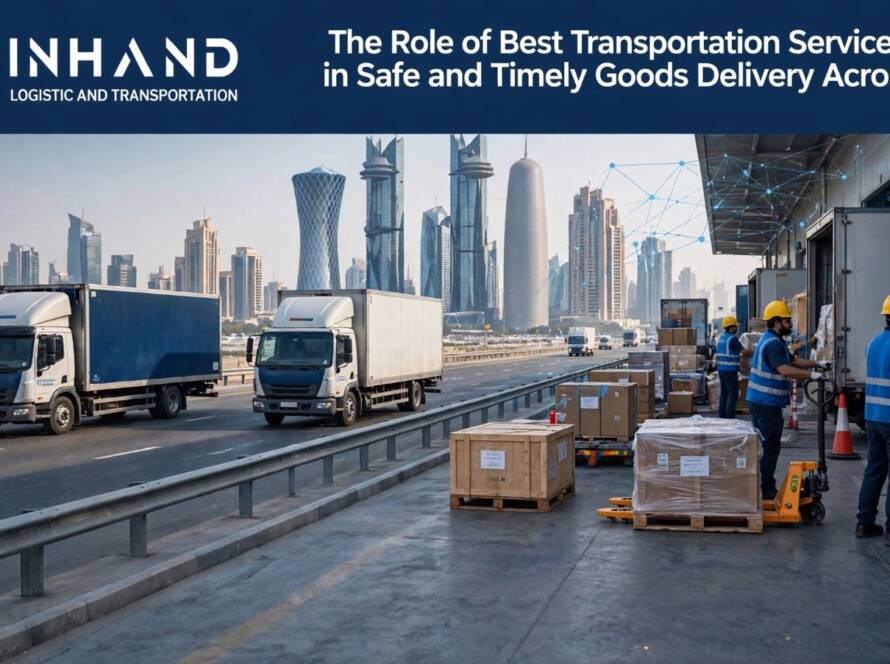
InHand Logistics provides transportation solutions that include corporate staff transport, last-mile delivery, distribution, and specialised cargo transport. Businesses can review its transportation services in Qatar to identify options relevant to their operations.
Clear communication also improves service reliability. Agree on who receives schedule updates, how delays are reported, and whom to contact when a vehicle or delivery is unavailable.
How Businesses Can Optimize Transportation Routes and Fuel Costs
Businesses can optimise transportation routes and fuel costs by grouping nearby deliveries, reducing unnecessary journeys, and scheduling trips around practical collection and delivery windows.
Fuel expenses depend on distance travelled, traffic conditions, vehicle suitability, idling time, and the number of stops required. Poorly planned journeys can increase costs even when businesses use fuel-efficient vehicles.
Route planning helps businesses identify opportunities to reduce unnecessary kilometres and complete more work within available driving hours.
Consider these practical measures:
- Group nearby deliveries: Assign orders in the same area to a planned delivery run where deadlines and vehicle capacity allow.
- Plan routes around delivery windows: Sequence stops to reduce backtracking while meeting customer requirements.
- Reduce empty journeys: Coordinate return trips with collections or other suitable transport tasks when practical.
- Monitor fuel usage: Compare fuel consumption and kilometres travelled across similar routes to identify unusual increases.
- Review delivery performance: Track completed stops, missed delivery windows, and repeat journeys to identify avoidable costs.
Businesses operating across Doha, Lusail, and Al Wakrah should review delivery patterns regularly rather than relying on a fixed route for every trip. Traffic, customer locations, and shipment volumes can change the most efficient sequence.
Final takeaway
Before committing to a transportation arrangement, businesses should calculate the cost per trip, employee, or delivery rather than compare monthly charges alone. A suitable arrangement should match current demand while allowing room for seasonal workloads, new projects, and changes in delivery volumes.
Start by identifying which routes and transport requirements consume the most resources, then request quotations based on those actual needs. This gives you a clearer basis for comparing providers and avoiding unnecessary commitments.
If you need a transport partner for employee movement, goods distribution, or scheduled deliveries, get in touch with InHand Logistics to discuss a solution for your business operations.
Frequently asked questions
1. What are the benefits of using a transportation service for business in Qatar?
Yes, a transportation service helps businesses manage daily travel and delivery requirements without maintaining an additional fleet. Companies can reduce vehicle ownership expenses, arrange transport according to demand, and allocate more resources to their core operations.
2. How can business transportation services reduce operating costs?
Business transportation services can reduce operating costs by limiting fleet ownership, driver salaries, insurance, and maintenance expenses. Businesses can also pay for transport based on actual requirements instead of maintaining vehicles that remain unused between assignments.
3. Which businesses can benefit from transportation services in Qatar?
Retailers, construction companies, offices, schools, warehouses, and distribution businesses can benefit from transportation services in Qatar. They can arrange employee commutes, goods movement, scheduled deliveries, and project-related transport based on their operational requirements.
4. Can I arrange daily employee transportation for my business in Qatar?
Yes, you can arrange daily employee transportation through scheduled pickup and drop-off services. Discuss employee numbers, residential locations, shift timings, vehicle capacity, and route requirements with the provider to establish a suitable transport schedule.
5. How can my business reduce fuel and vehicle maintenance costs?
You can reduce fuel and maintenance costs by planning efficient routes, avoiding unnecessary journeys, and monitoring vehicle performance. Grouping nearby deliveries and comparing fleet ownership with outsourced transport can also help identify potential savings.
6. What should I check before hiring a transportation company in Qatar?
Check the company’s service coverage, vehicle availability, pricing structure, safety procedures, and experience with your transport requirements. Also, clarify additional charges, contract terms, breakdown support, and how the provider manages urgent bookings or schedule changes.